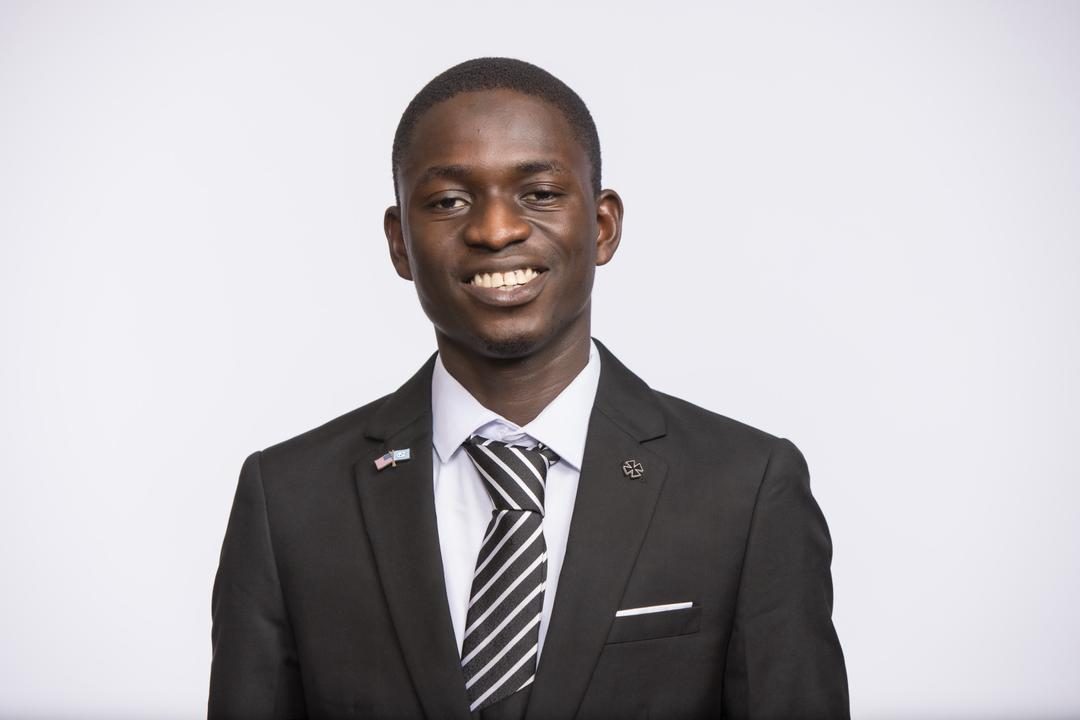
When Fadilullahi (Fadil) Adeniyi joined the CyberData Foundation Scholarship Program, he wasn't looking to change careers he was looking to expand his potential. As a Chemical Engineering student with a passion for battery technology and sustainable energy, Fadil recognized that the future of engineering would be shaped by data. Through the Foundation's scholarship to study Data Science at AltSchool Africa, he gained the skills to bridge engineering and technology, transforming curiosity into confidence and setbacks into opportunities for growth and we talked about this in our current interview:
Big picture / Origin story
What made you choose this tech school/program in the first place?
As a Chemical Engineering student, I've always believed that the future belongs to people who can combine domain expertise with technology. My long-term goal is to contribute to solving energy challenges, especially in battery technology and sustainable energy systems. I quickly realized that engineering alone wasn't enough. The world is becoming increasingly data-driven, and the ability to collect, analyze, and communicate insights is now a superpower.
When I saw the opportunity through the CyberData Foundation to study Data Science withAltSchool Africa, I knew it aligned perfectly with where I want my career to go. It wasn't about changing fields—it was about adding another layer to my engineering toolkit.
If you could describe your first day vs today in 3 words each, what would they be?
First day: Curious. Excited. Uncertain. Today: Confident. Resilient. Empowered.
What was the toughest skill or concept you had to conquer? What flipped it for you?
For me, it wasn't just learning Python or Tableau. It was learning how to think like a data scientist. Moving from simply writing code to asking the right questions, cleaning messy datasets, finding patterns, and telling meaningful stories with data took time. The turning point came when I stopped asking, "How do I finish this assignment?" and startedasking, "What insight is hidden inside this data?" That mindset changed everything.
Tell me about a project you're most proud of. What problem did it solve?
Definitely my final project in the third semester. It took longer than I expected, but finishing it remains one of my proudest moments. From writing hundreds of lines of Python code, building the Tableau dashboard, cleaning and analyzing the dataset, to generating actionable business insights. It all felt incredibly rewarding. Seeing everything come together reminded me why I chose Data Science in the first place: using data to help people make better decisions.
Was there a moment you almost quit? What kept you going?
Absolutely. During my fellowship year at UNC Chapel Hill, I was juggling coursework, research in battery technology, leadership activities, networking events, and several other commitments. At one point, I became so overwhelmed that I missed the deadline for my third-semester examinations. It was frustrating because I knew how much I had invested in the program. I remember reaching out to Miss Ibukun, our Program Director at the CyberData Foundation. Instead of letting me give up, she encouraged me to take the available remedy by joining the next cohort for the third semester. I'm really grateful I listened. That decision reminded me that sometimes success isn't about never falling behind. It's about having the courage to continue.
Today, I'm proud to say I completed the program.
Who here—instructor, classmate, mentor—changed your trajectory? How?
Miss Ibukun. Her encouragement came at exactly the time I needed it. Sometimes one conversation is enough to remind you why you started, and that's exactly what happened. She helped me see that one setback didn't define my journey.
What's one thing you believed about tech/yourself on day one that you don't believe anymore?
I used to think Data Science was only for people with Computer Science backgrounds. Now I know that people from any discipline can thrive if they're willing to learn consistently and solve real problems. Engineering has actually given me a unique perspective when working with data.
What skill surprised you? Like "I didn't know I'd be good at this."
Data visualization. I genuinely enjoy turning raw numbers into dashboards that tell clear stories. Watching people understand a problem simply by looking at a well-designed visualization is incredibly satisfying.
How did you handle imposter syndrome or comparison with classmates?
I reminded myself that everyone starts from somewhere. Instead of comparing my Chapter 1 with someone else's Chapter 20, I focused on improving one day at a time.
What are you taking from this school that isn't on the syllabus?
Resilience. Consistency.
The confidence to learn difficult things.I've also learned that opportunities don't always come from knowing everything—they come from being willing to keep learning.
Where do you want to be one year from now? What's the first step you'll take next week?
One year from now, I want to be working at the intersection of Chemical Engineering, Data Science, and Battery Technology.
I see myself using data to improve battery manufacturing, optimize production processes, and support the transition to cleaner energy. Next week, I'll continue building projects, strengthening my portfolio, and applying what I've learned to real engineering problems.
What advice would you give someone just starting this program today?
Don't rush the process. Be curious. Ask questions. Build projects. Don't be afraid to make mistakes.
Most importantly, remember why you started. There will be difficult days, but if you stay consistent, you'll surprise yourself with how far you can go.
If you could thank one tool, language, or framework in an Oscar speech, which one? Why?
Python. Without a doubt. Python transformed the way I think.
It taught me that every complex problem can be broken down into smaller, solvable pieces. More than a programming language, it became a tool for solving real-world problems, and I know it's only the beginning of what I'll build with it.